About the Author
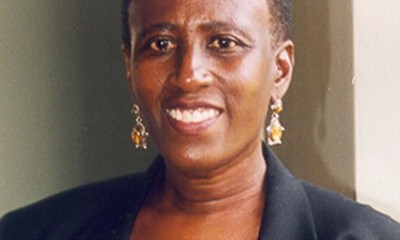
Merle Collins was born in 1950 in Aruba to Grenadian parents. She was taken to Grenada shortly after her birth. Her primary education was in the parishes of St Patrick and St George, Grenada. Her secondary education was at the St. Joseph’s Convent high school, Grenada. She graduated from the University of the West Indies in Mona, Jamaica, where she took a degree in English and in Spanish. After graduating in 1972, she returned to Grenada, where she taught History and Spanish for the next two years. She has also taught in St Lucia. In 1980 she was awarded a Masters in Latin American Studies from Georgetown University, USA. She holds a Ph.D. in Government from the London School of Economics, University of London.
Collins was deeply involved in the Grenadian revolution and served as a coordinator for Research on Latin America and the Caribbean for the Government of Grenada. She left Grenada in 1983.
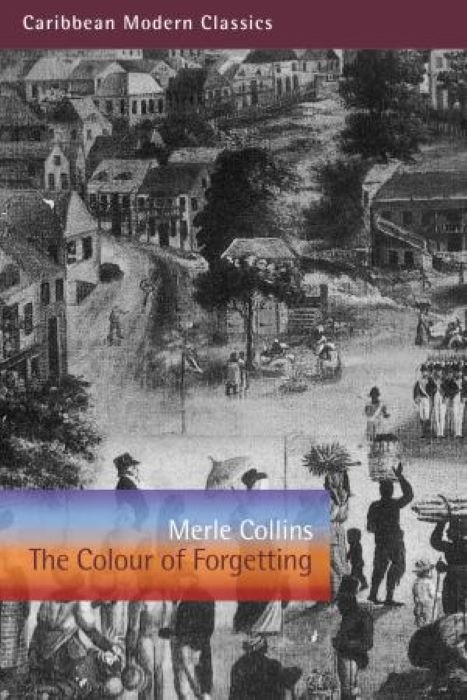
Her first collection of poetry, Because the Dawn Breaks was published by Karia Press in 1985. At this time she was a member of African Dawn, a performance group combining poetry, mime and African music. The collaboration with African Dawn followed her encounter with the group when they all participated in a London performance of the Kenyan writer Ngügi wa’Thiongo’s The Trial of Dedan Kimathi. In 1987, she published her first novel Angel, which follows the lives of both Angel and the Grenadian people as they struggle for independence. This was followed by a collection of short stories, Rain Darling in 1990, and a second collection of poetry, Rotten Pomerack in 1992. Her second novel, The Colour of Forgetting, was published in 1995 and will be republished as a Caribbean Modern Classic in 2023. She has also published a biography, The Governor's Story: The Authorised Biography of Dame Hilda Bynoe.
Her critical works include “Themes and Trends in Caribbean Writing Today” in From My Guy to Sci-Fi: Genre and Women's Writing in the Postmodern World, “To be Free is Very Sweet” in Slavery and Abolition, “Cultural Expression and the Grenada Revolution,” chapter in Nicole Phillips-Dowe & John Angus Martin, ed., Perspectives on the Grenada Revolution, and “Explorations of the Self,” chapter in Raphael and Curdella Forbes, Caribbean Literature in Transition.
She is currently Professor Emerita, University of Maryland, College Park.