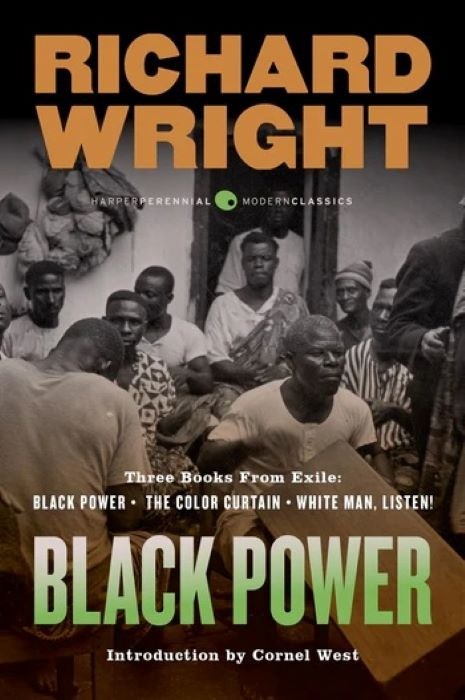
Black Power | Three Books from Exile: Black Power; The Color Curtain; and White Man, Listen! | Richard Wright
Description
“The time is ripe to return to [Wright’s] vision and voice in the face of our contemporary catastrophes and hearken to his relentless commitment to freedom and justice for all.” — Cornel West (from the Introduction)
Black Power: A Record of Reactions in a Land of Pathos is Richard Wright’s chronicle of his trip to Africa’s Gold Coast before it became the free nation of Ghana. It speaks eloquently of empowerment and possibility, freedom and hope, and resonates loudly to this day.
The Color Curtain: A Report on the Bandung Conference is a vital piece arguing for the removal of the color barrier and remains one of the key commentaries on the question of race in the modern era. “Truth-telling will perhaps always be unpopular and suspect, but in The Color Curtain . . . Wright did not hesitate to tell the truth as he saw it” (Amritjit Singh, Ohio University).
White Man, Listen! is a stirring assortment of Wright’s essays on race, politics, and other social concerns close to his heart. It remains a work that “deserves to be read with utmost seriousness, for the attitude it expresses has an intrinsic importance in our times” (New York Times).
RICHARD WRIGHT, born September 1908, was an African American novelist and short-story writer. He was among the first African American writers to protest white treatment of Black people, most notably in his 1940 novel Native Son and in his 1945 autobiography Black Boy. Wright’s grandparents had been slaves, and Wright grew up in poverty, shifting from one relative to another. He worked a number of jobs and moved around the southern United States before finding critical acclaim with his first collection of short stories, Uncle Tom’s Children, moving to New York City, and eventually settling in Paris as a permanent expatriate. He died in Paris in 1960.